
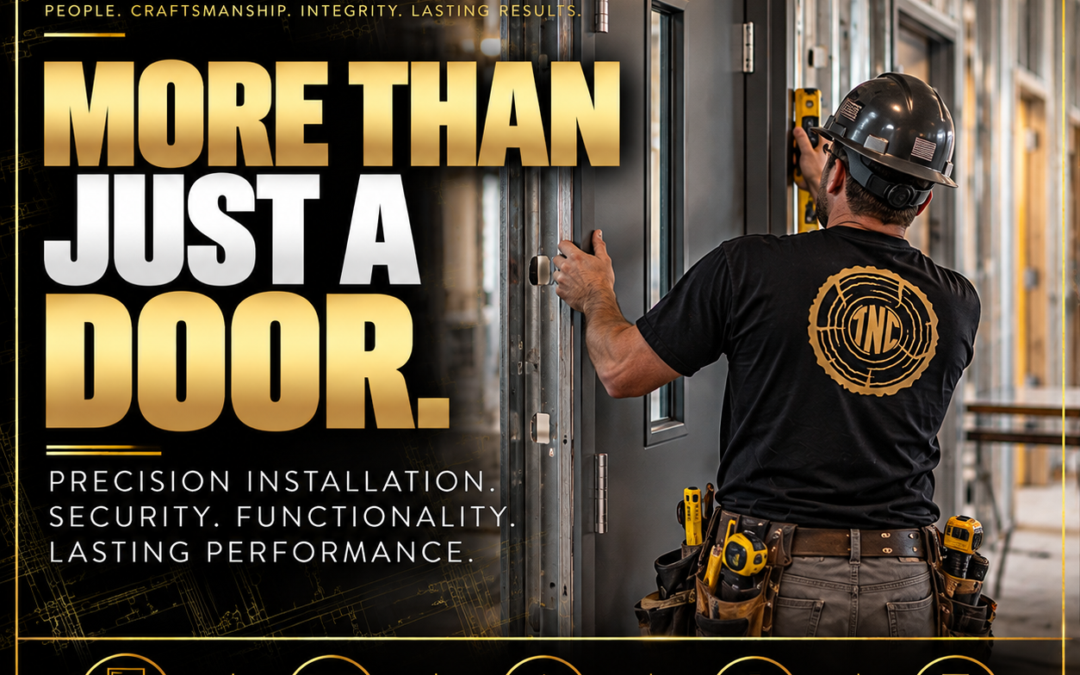
When you walk into an office building, retail store, healthcare facility, or commercial property, you probably don’t give much thought to the doors.
You open them, walk through them, and go about your day.
But in commercial construction, doors are much more than simple entryways.
They play an important role in building security, accessibility, fire protection, functionality, and the overall quality of a finished space.
At Top Notch Carpentry, LLC, we understand that proper door, frame, and hardware installation requires precision, coordination, and attention to detail.
Whether it’s a new commercial build-out, renovation, or tenant improvement, getting these components right matters.
- Commercial Doors Have a Bigger Job Than You Think
Unlike many residential doors, commercial doors are often designed to withstand frequent use while meeting specific building requirements.
Depending on the application, commercial door assemblies may need to provide:
- Security and controlled access
- Fire and smoke protection
- Accessibility
- Sound reduction
- Privacy
- Durability in high-traffic environments
- Reliable daily operation
Different spaces have different requirements.
A door serving an office suite may have very different specifications from one installed in a healthcare corridor, stairwell, or commercial storage area.
That’s why understanding the project specifications and intended use of each opening is essential.
- Proper Frame Installation Is the Foundation
A commercial door is only as effective as the frame supporting it.
Frames must be installed accurately, with attention to alignment, anchorage, clearances, and the surrounding wall construction.
An improperly installed frame can create problems that affect the entire door assembly.
These may include:
- Doors that bind or drag
- Uneven gaps around the opening
- Difficulty latching or closing
- Premature hardware wear
- Problems with accessibility or required clearances
In commercial construction, correcting these issues after finishes are complete can be costly and disruptive.
Accurate installation from the beginning helps reduce unnecessary rework.
- Hardware Selection and Installation Matter
Commercial door hardware goes far beyond standard hinges and handles.
Depending on the building and opening requirements, hardware may include:
- Locksets and latchsets
- Exit devices and panic hardware
- Door closers
- Hinges and pivots
- Thresholds and weatherstripping
- Coordinators and flush bolts
- Access-control components
Each component must be compatible with the door assembly and properly installed.
A door closer that isn’t adjusted correctly may prevent a door from closing and latching reliably.
Improperly installed hardware can affect security, accessibility, and daily operation.
In commercial environments, these details are especially important because doors may be used hundreds of times each day.
- Fire-Rated Door Assemblies Require Special Attention
Some commercial openings are required to have fire-rated door assemblies.
These assemblies are designed and tested to help limit the spread of fire and smoke when properly installed and maintained.
Fire-rated openings may have specific requirements for doors, frames, glazing, hardware, labels, and clearances.
The components must be compatible with the approved assembly, and installation must follow applicable codes, listing requirements, and manufacturer instructions.
Modifications to fire-rated assemblies cannot simply be treated like ordinary carpentry adjustments.
For general contractors, coordinating these requirements early helps reduce inspection issues and costly corrections.
- Accessibility Should Never Be an Afterthought
Commercial doors also play an important role in accessibility.
Depending on the application, requirements may address clear opening widths, maneuvering clearances, thresholds, hardware operation, opening force, and door closing speed.
An opening that looks correct may still create difficulties for individuals using wheelchairs, walkers, or other mobility aids.
Accessibility should be considered during layout, product selection, and installation—not only during final inspection.
Working from approved drawings and applicable accessibility standards helps support compliant, functional spaces.
- Door Installation Requires Coordination Between Trades
Commercial door, frame, and hardware installation rarely happens in isolation.
Frames may need to be coordinated with framing and drywall installation.
Electrical contractors may be involved in access-control systems.
Security vendors may install card readers, electric strikes, or other specialized components.
Flooring materials can affect door clearances and threshold installation.
Finish carpentry and painting may also need to be coordinated around the opening.
Without proper communication, small installation conflicts can create delays or rework.
A successful commercial project depends on everyone understanding how their work connects.
- Quality Installation Reduces Long-Term Problems
A commercial door may look great on the day a project is completed.
But the real test comes with everyday use.
Doors that are properly installed and adjusted are more likely to operate reliably and require fewer corrective adjustments.
Poor installation can contribute to problems such as:
- Loose or misaligned hardware
- Doors that fail to latch
- Excessive friction or binding
- Damaged frames or finishes
- Premature wear
- Recurring maintenance issues
Attention to detail during installation can help reduce these problems and improve long-term performance.
For property owners and facility managers, that matters.
- Why General Contractors Need Experienced Carpentry Trade Partners
Commercial door and hardware installation requires more than the ability to hang a door.
It requires an understanding of construction documents, product specifications, installation requirements, and coordination with surrounding trades.
General contractors benefit from trade partners who recognize these responsibilities and communicate potential issues before they become larger problems.
At Top Notch Carpentry, LLC, our commercial carpentry capabilities include doors, frames, hardware, rough and finish carpentry, framing, millwork, and commercial build-outs.
We understand that individual installation details contribute to the success of the entire project.
Building Better Commercial Spaces in Memphis
From office renovations and retail build-outs to larger commercial construction projects, doors, frames, and hardware are essential components of a functional building.
Proper installation supports security, accessibility, durability, and the quality of the finished space.
At Top Notch Carpentry, LLC, we’re passionate about delivering skilled craftsmanship and supporting successful construction projects throughout Memphis and the surrounding communities.
Whether you’re a general contractor preparing for an upcoming build-out or a commercial property owner planning improvements, we’d welcome the opportunity to discuss your project.
Let’s build something Top Notch!
📞 901-517-2117
🌐 www.topnotchcarpentryllc.com
Carpentry is our passion. Beautiful work is the result.
Recent Comments