
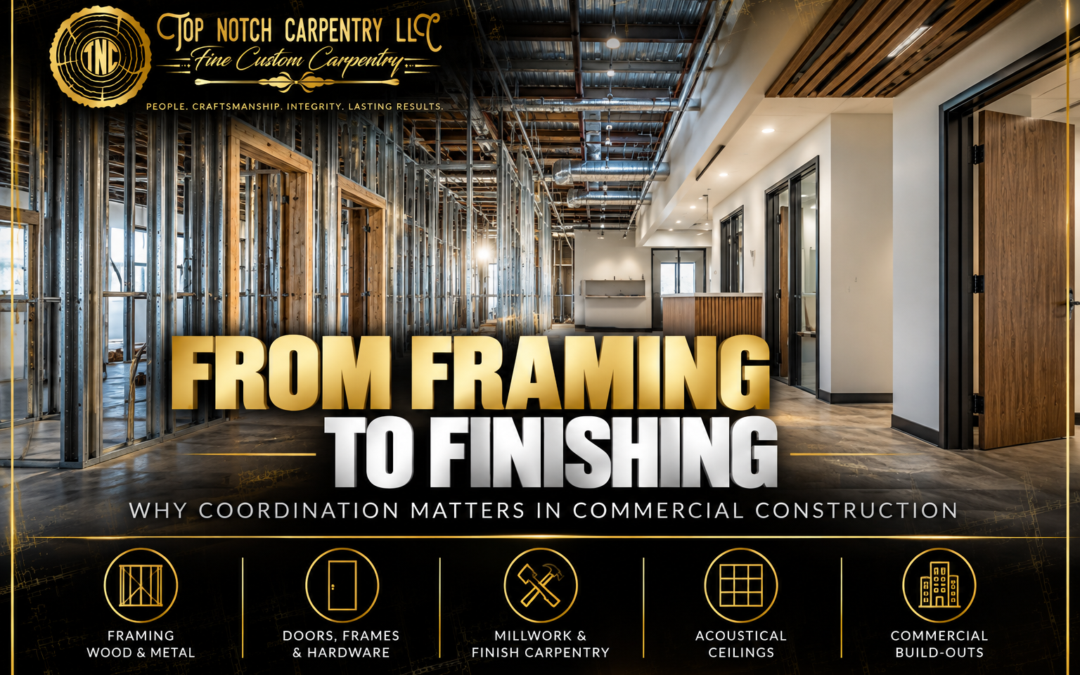
Commercial construction is a team effort.
From the first layout lines to the final installation of doors, millwork, and interior finishes, every phase of a project depends on careful coordination between multiple trades.
For general contractors, project managers, and superintendents, keeping those activities aligned can be one of the biggest challenges on a busy jobsite.
At Top Notch Carpentry, LLC, we understand the importance of communication, scheduling, and quality workmanship in commercial construction.
With experience across retail, office, hospitality, multifamily, and other commercial environments, we recognize that successful projects require more than individual trade expertise.
They require teamwork.
- Commercial Construction Is a Connected Process
A commercial project involves numerous scopes of work, each with its own responsibilities, schedules, and requirements.
Framing may need to be completed before mechanical, electrical, and plumbing rough-ins can proceed.
Wall assemblies may require inspection before finishes are installed.
Door frames, ceilings, and millwork must be coordinated with surrounding construction.
When one activity falls behind, the effects can extend well beyond that individual trade.
Understanding these relationships helps construction teams plan work more effectively.
- Accurate Framing Creates a Strong Foundation
Framing establishes much of the layout and geometry of an interior space.
Wall locations, openings, elevations, and structural details must align with the approved construction documents.
Errors during framing can create problems for subsequent trades.
Improperly positioned openings may complicate door installation.
Inaccurate wall dimensions can affect cabinetry or millwork.
Misaligned framing may require corrective work before finishes can proceed.
That’s why attention to detail during the early phases of construction is so important.
- Communication Keeps Projects Moving
Construction issues happen.
Materials may arrive late.
Existing conditions may differ from drawings.
Design clarifications may be required.
The difference between a manageable issue and a major disruption often comes down to communication.
Trade partners should identify concerns early, communicate them clearly, and coordinate with the appropriate project representatives before proceeding with affected work.
Timely communication helps project teams evaluate options and make informed decisions.
- Millwork and Finish Carpentry Require Precision
Finish carpentry is one of the final opportunities to bring a commercial interior together.
It can include:
- Interior trim packages
- Commercial doors and hardware
- Cabinetry and custom storage
- Architectural millwork
- Wood stairs and railings
- Custom installations
These components often interface with work performed by other trades.
Field measurements, substrate conditions, approved details, and material specifications all influence successful installation.
Careful coordination can help reduce unnecessary modifications, damage, and rework.
- Commercial Build-Outs Have Unique Challenges
Tenant improvements and commercial renovations can involve tight schedules, existing building conditions, and specific operational requirements.
Some projects must be completed while portions of a facility remain occupied or operational.
Others require coordination with landlords, building management, inspectors, or specialty vendors.
Planning access, material deliveries, work areas, and installation sequences can help reduce unnecessary disruption.
Every project has different requirements, making flexibility and clear communication especially important.
- Quality Control Should Happen Throughout Construction
Waiting until the final punch list to address workmanship concerns can create avoidable complications.
Quality control should be part of the construction process from the beginning.
This includes checking measurements, reviewing installation requirements, protecting completed work, and identifying deficiencies as work progresses.
Consistent attention to detail helps support a smoother project closeout.
- Reliable Trade Partners Support the Entire Project Team
General contractors rely on subcontractors to complete their scopes while contributing to the overall project schedule.
A dependable carpentry trade partner understands that their performance affects other trades, project milestones, and the owner’s experience.
Professionalism includes communicating effectively, respecting jobsite safety requirements, coordinating work, and addressing concerns promptly.
Strong working relationships are developed through consistent performance.
- Experience Across Multiple Scopes Can Improve Coordination
Carpentry touches many phases of commercial construction.
From rough framing to final trim installation, understanding how these activities connect can help teams anticipate coordination needs.
Top Notch Carpentry’s commercial capabilities include:
- Rough and finish carpentry
- Wood and metal framing
- Doors, frames, and hardware
- Millwork installation
- Interior trim packages
- Custom cabinetry
- Acoustical ceilings
- Commercial renovations and tenant build-outs
Our experience across these areas helps us understand the importance of planning and coordination throughout construction.
Building Stronger Commercial Partnerships in Memphis
Successful commercial construction requires skilled trades, effective communication, and a shared commitment to delivering quality work.
At Top Notch Carpentry, LLC, we’re proud to provide commercial carpentry and construction services throughout Memphis and the surrounding area.
Whether you’re preparing a tenant improvement, commercial renovation, or new construction project, we’d welcome the opportunity to discuss your carpentry needs.
Have plans for an upcoming project? Let’s talk scope.
📞 901-517-2117
✉️ info@topnotchcarpentryllc.com
🌐 www.topnotchcarpentryllc.com
Top Notch Carpentry, LLC — Carpentry is our passion. Beautiful work is the result.
Week 2 Social Media
Monday, November 9 — From Framing to Finishing
Recent Comments